Efficient Magnetic Solutions for Glass Industry
Longer Furnace Life, Energy Savings, Enhanced Glass Color, and Advanced Raw Material Beneficiation
Introduction: A Clean Start for High-Performance Glass
As the glass industry advances towards higher clarity, reduced emissions, and extended furnace life, controlling iron contamination in raw materials has become a fundamental requirement. From improving melting efficiency to enabling high-purity silica beneficiation, magnetic separation technologies are now an integral part of modern glass production.
In this context, MIKNATIS AR-GE, a leader in magnetic engineering, delivers tailored solutions that address contamination risks across the entire production line. This article showcases field applications in raw material processing and cullet recovery, including results from collaborative R&D efforts with global manufacturer Şişecam.
The Hidden Cost of Contamination—and How to Prevent It
Iron and other metallic impurities may be small, but their impact is significant. Strategic use of magnetic systems provides:
- – Enhanced product quality through fewer inclusions and clearer color
- – Reduced chemical usage, as cleaner batches require less decolorant
- – Longer furnace life, thanks to less refractory wear
- – Lower energy demand, achieved by more efficient melting
- – Decreased CO₂ emissions, by avoiding combustion of iron-bearing particles
Critical Points: Where Magnetic Systems Matter Most
MIKNATIS AR-GE’s product range covers every vital point in glass production:
- – Raw Material Intake: Manual “füze” and neodymium plate separators prevent heavy metal parts from entering silos.
- – Beneficiation Lines: Ø300 mm roll separators upgrade silica and feldspar purity to solar-glass levels.
- – Cullet Transfer Zones: Magnetic transition plates remove residual metal during handling.
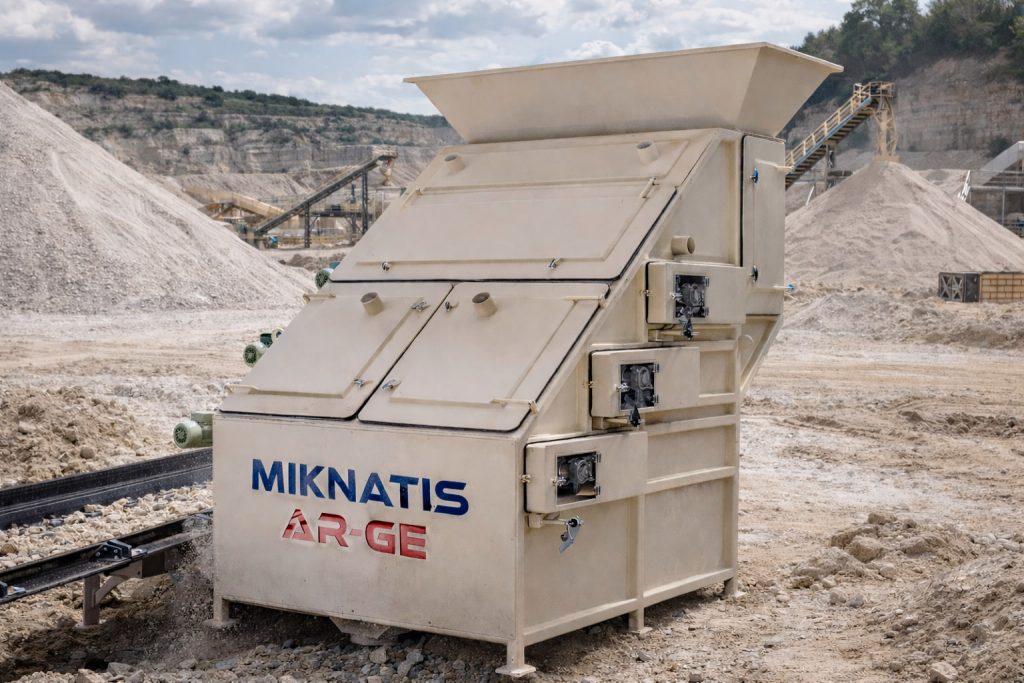
- – Furnace Feed: Custom-designed automatic neodymium systems capture fine ferrous particles before melting.
- – Cullet Recycling: Eddy Current Separators remove non-ferrous metals like aluminium and copper.
- – Wet Processing Zones: Electromagnetic filters enhance flotation purification in feldspar lines.
Purifying Silica for Next-Generation Glass
To meet the demands of solar and low-iron glass, MIKNATIS AR-GE’s roll separator technology reduces Fe₂O₃ content from 150 ppm to under 30 ppm, achieving over 99.9% SiO₂ with minimal waste. These systems run at 6–12 t/h, enabling large-scale production of premium raw materials.
Optimising Glass Recycling Through Non-Ferrous Removal
In cullet systems, ferrous magnets combined with Eddy Current Separators eliminate non-magnetic contaminants. This ensures only clean, homogenous cullet returns to the furnace—boosting sustainability without compromising performance.
Tailored Field Solutions in Action
From belt transfer areas to mold zones, magnetic systems are adapted to site-specific needs:
- – Cullet transition plates implemented at Paşabahçe sites improved safety and consistency.
- – Manual magnetic zones around molds captured loose screws and parts during maintenance.
- – In Şişecam Eskişehir, one neodymium system captured 2.5 kg of ferrous material in just one week—material that would have otherwise reached the furnace.
Collaborative Innovation with Şişecam
A year-long partnership between Şişecam and MIKNATIS AR-GE focused on improving magnetic efficiency across multiple facilities. Outcomes include:
- – Optimised plate placement at high-risk zones
- – Real-time testing and field validation
- – Clear link between reduced contamination and extended furnace life & lower fuel use
Conclusion: The Future is Magnetic
Magnetic technologies are no longer auxiliary—they are central to glass industry innovation. Cleaner inputs mean lower emissions, longer furnace life, and superior optical results. With proven solutions across raw material and recycling stages, MIKNATIS AR-GE continues to shape the future of high-performance glass production.
From input to output—cleaner, smarter, stronger.