


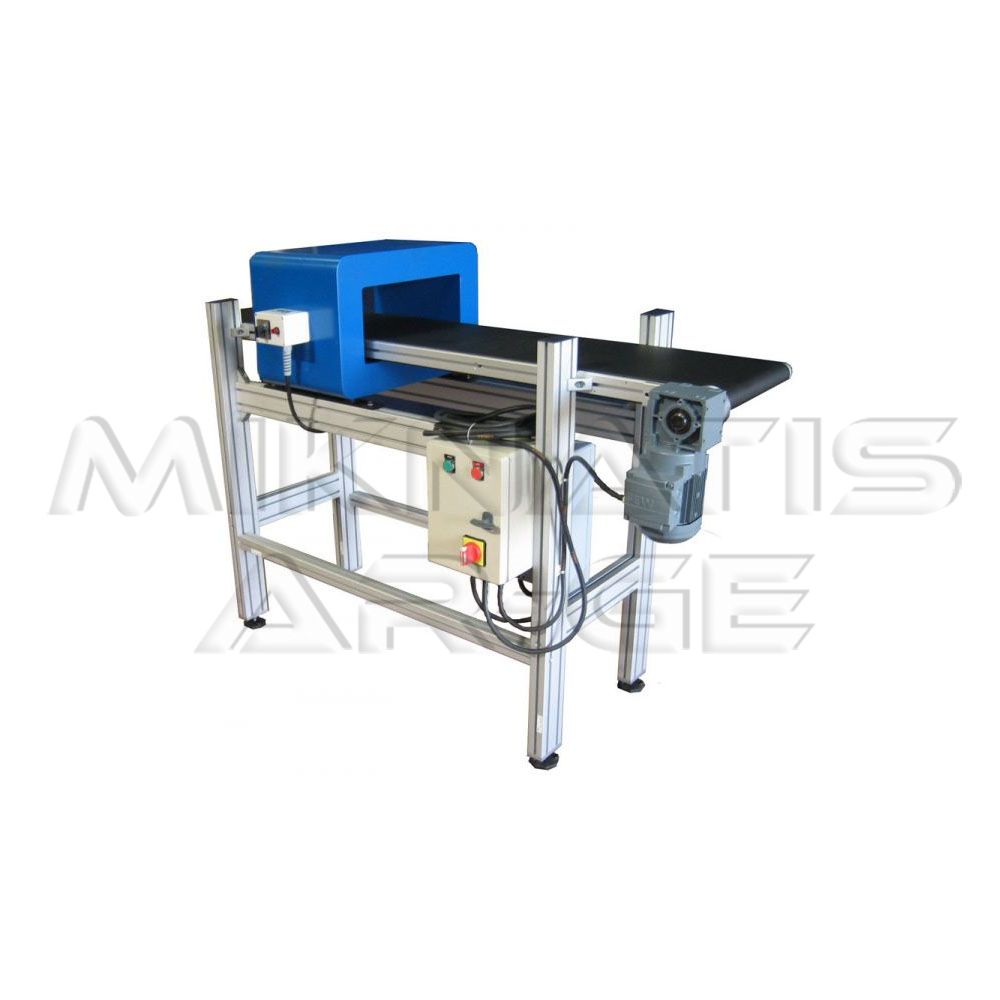
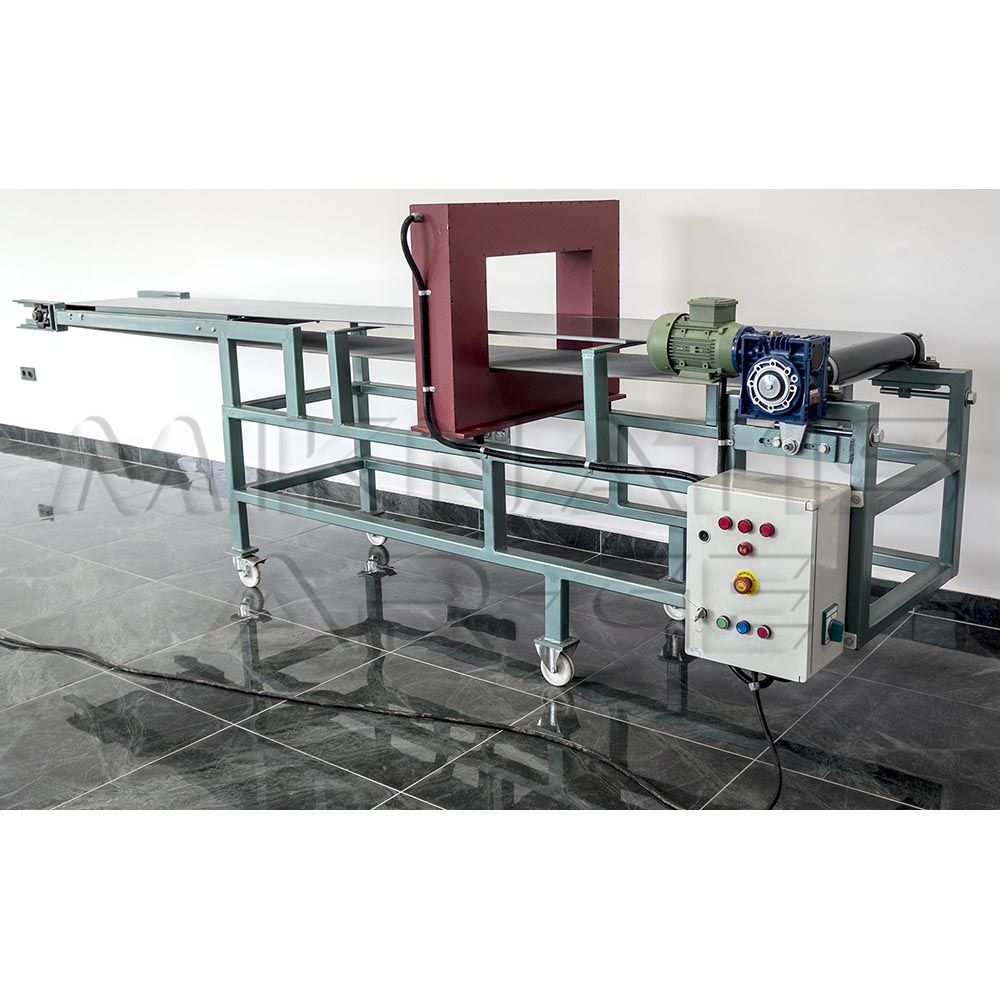


Introduction to Tunnel Type Demagnetizers
Tunnel type demagnetizers are essential industrial devices designed to efficiently remove residual magnetism from ferromagnetic materials. This residual magnetism often occurs in workpieces after various manufacturing processes such as machining, grinding, heat treatment, or welding, where they are exposed to magnetic fields. If not removed, this residual magnetism can lead to a host of problems, including attracting metallic swarf and debris, interfering with subsequent processes like coating or measurement, and causing issues in the final product’s performance.
Unlike metal detectors which identify the presence of metal, demagnetizers actively neutralize magnetic fields. Tunnel demagnetizers are particularly effective for parts that can be conveyed through a continuous magnetic field, making them ideal for high-volume production lines. Their design ensures that parts pass through a progressively decaying alternating magnetic field, effectively scrambling and eliminating any lingering magnetism.
Working Principle and Advanced Technology
How Tunnel Demagnetizers Work
The core principle behind a tunnel demagnetizer involves exposing a magnetized part to a strong, alternating magnetic field that gradually diminishes in strength. As a workpiece passes through the tunnel, it enters an area with a high-intensity AC magnetic field. This field continuously reverses the magnetic domains within the material. As the part moves further through the tunnel and exits, the intensity of the alternating field progressively decreases to zero. This controlled reduction ensures that the magnetic domains are left in a randomly oriented state, effectively demagnetizing the material. The speed at which the part passes through the tunnel and the frequency of the alternating current are critical factors influencing the effectiveness of the demagnetization process.
Key Technologies and Components
- Advanced Coil Design: High-efficiency copper coils precisely wound to generate uniform and powerful alternating magnetic fields within the tunnel.
- Variable Frequency and Amplitude Control: Modern demagnetizers offer sophisticated control over the AC field’s frequency and amplitude, allowing for optimized demagnetization of various materials and part geometries.
- Integrated Cooling Systems: Continuous operation generates heat, especially in high-power units. Efficient air or water-cooling systems are integrated to maintain optimal operating temperatures and ensure coil longevity.
- Conveyor Integration: Many tunnel demagnetizers are designed for seamless integration with existing conveyor systems, enabling automated, in-line demagnetization processes for maximum throughput.
- Digital Control Interface: User-friendly interfaces with digital displays for setting parameters, monitoring status, and diagnosing potential issues, ensuring precise and repeatable results.
Applications and Industry Impact
Tunnel type demagnetizers find extensive use across a wide range of industries where precision, cleanliness, and material integrity are paramount. Their ability to process parts continuously makes them indispensable for mass production environments.
- Automotive Industry: Demagnetizing engine components, transmission parts, and bearings to prevent premature wear and ensure smooth operation.
- Aerospace and Defense: Crucial for critical components where even minor magnetic interference can affect sensitive instrumentation or lead to material fatigue.
- Tooling and Die Manufacturing: Demagnetizing tools and dies to prevent chip adhesion and improve surface finish quality during machining.
- Bearing and Gear Manufacturing: Ensuring that bearings and gears are free from residual magnetism to prevent the attraction of abrasive particles, extending their lifespan.
- Medical Device Production: Essential for precision medical instruments and implants where magnetic fields could interfere with diagnostic equipment or patient safety.
- Post-Machining and Heat Treatment: Removing magnetism induced during cutting, grinding, or certain heat treatment processes before final assembly or inspection.
Benefits of Implementing a Tunnel Type Demagnetizer
The adoption of tunnel demagnetization technology yields significant operational and quality advantages:
- Improved Product Quality: Eliminates residual magnetism that can attract ferrous contaminants, leading to cleaner parts and improved surface finishes.
- Reduced Contamination Risks: Prevents the adhesion of metallic swarf and grinding dust, which can cause wear, damage, or interfere with subsequent processes like plating or painting.
- Enhanced Machining Processes: Demagnetized parts are easier to machine as cutting tools experience less friction and wear.
- Extended Tool Life: Prevents metal chips from sticking to cutting tools, reducing wear and prolonging tool lifespan.
- Optimized Welding and Assembly: Eliminates “arc blow” in welding and ensures components align correctly during automated assembly.
- Compliance with Standards: Helps meet strict industry standards for residual magnetism in critical components.
- Increased Efficiency: Automated processes significantly reduce manual labor and accelerate production lines.
Technical Specifications (Example)
While specifications can vary based on model and application, typical tunnel demagnetizers feature:
- Input Voltage: 220V / 380V / 480V AC, 50/60 Hz (as per regional standards)
- Demagnetizing Field Strength: Adjustable, typically ranging from 0 to 500 Gauss (50 mT) or higher at the tunnel center.
- Tunnel Dimensions (Internal): Customizable from 50×50 mm up to 500×500 mm or larger, depending on part size requirements.
- Conveyor Speed: Variable, often ranging from 0.1 to 1.5 m/s, allowing optimization for different material types and desired demagnetization levels.
- Duty Cycle: Designed for continuous operation (100% duty cycle) in demanding industrial environments.
- Control Interface: PLC-based control with HMI (Human Machine Interface) for precise parameter adjustment and monitoring.
- Safety Features: Over-temperature protection, emergency stop buttons, and robust enclosure ratings (e.g., IP54/IP65).
- Residual Magnetism Level: Achievable levels typically below 2-5 Gauss, depending on material, size, and demagnetizer configuration.
Choosing the right tunnel demagnetizer involves considering factors such as part material, size, desired residual magnetism level, production throughput, and integration with existing production lines. Advanced models offer enhanced features for specific applications, ensuring optimal performance and cost-effectiveness.
Please contact for more information.


