


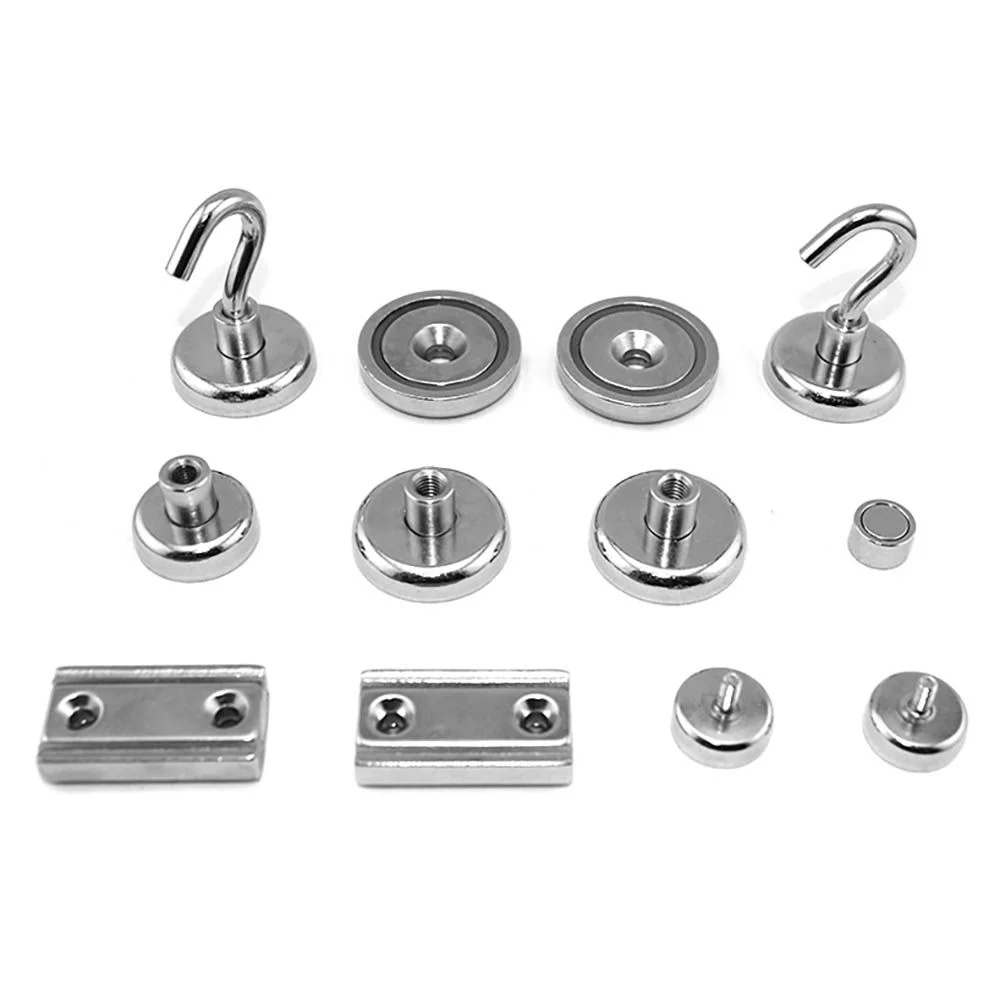
NdFeB Neodymium Pot Magnets: Unveiling Their Power and Versatility
NdFeB Neodymium Pot Magnets represent a pinnacle in magnetic technology, combining the immense power of Neodymium Iron Boron (NdFeB) magnets with a protective and force-directing steel housing. These ingenious magnetic assemblies are engineered to deliver superior holding strength in a compact, durable, and highly versatile package, making them indispensable across a vast array of industrial, commercial, and consumer applications.
The term “pot magnet” refers to the specific design where a powerful magnet, in this case, a Neodymium disc or ring, is encased within a steel cup or “pot.” This design is not merely for protection; it plays a crucial role in enhancing the magnet’s performance and usability.
What Makes NdFeB Neodymium Pot Magnets So Effective?
The exceptional performance of these magnets stems from two core elements:
- NdFeB Neodymium Magnet: As the strongest type of permanent magnet commercially available, Neodymium Iron Boron (NdFeB) provides an unparalleled magnetic field for its size. This rare-earth magnet material is known for its high residual induction (Br), high coercivity (Hcj), and maximum energy product ((BH)max), all contributing to its incredible pull force.
- Steel Pot (Housing): The surrounding steel pot serves multiple critical functions:
- Flux Direction: The steel acts as a magnetic circuit, directing and concentrating the magnetic flux to the active face of the magnet. This effectively amplifies the holding force when the magnet is in contact with a ferromagnetic surface.
- Protection: Neodymium magnets are inherently brittle and prone to chipping or breaking if subjected to impacts. The steel housing provides robust mechanical protection, significantly increasing the magnet’s durability and lifespan.
- Easy Mounting: The steel pot is easily machined to incorporate various mounting options such as threaded studs, internal threads, countersunk holes, or through-holes, simplifying integration into diverse systems and designs.
- Corrosion Resistance: While NdFeB magnets are typically coated (e.g., nickel, zinc, epoxy) for corrosion resistance, the steel pot adds an additional layer of protection, particularly in demanding environments.
Key Features and Technical Advantages
Understanding the technical specifications of NdFeB Neodymium Pot Magnets is crucial for selecting the right product for a specific application:
- Superior Holding Force: Thanks to the concentrated flux, these magnets offer significantly higher pull forces compared to bare Neodymium magnets of the same size. This makes them ideal for tasks requiring strong, reliable adhesion. The pull force is typically measured in kilograms or pounds and is highly dependent on the magnet’s grade, dimensions, and the thickness and material of the mating surface.
- Diverse Mounting Configurations: The steel housing allows for an array of attachment methods, enhancing their adaptability:
- Internal Thread: Ideal for screwing onto threaded rods or bolts.
- External Thread (Stud): Perfect for direct attachment to surfaces with a corresponding threaded hole.
- Countersunk Hole: Allows for flush mounting using flat-head screws.
- Through-Hole: Enables fastening with standard bolts or rivets.
- No Hole/Plain: For bonding or pressing into place.
- Temperature Ratings: Standard Neodymium magnets typically have a maximum operating temperature of 80°C (176°F). Exceeding this temperature can lead to irreversible demagnetization. However, special high-temperature grades (e.g., H, SH, UH, EH) are available, allowing operation at temperatures up to 200°C (392°F) or even higher, albeit with a slight reduction in magnetic strength at room temperature.
- Material Grades: NdFeB magnets are categorized by grades such as N35, N42, N52, etc. The number indicates the maximum energy product in mega-Gauss Oersteds (MGOe), which correlates directly with the magnet’s strength. Higher grades (e.g., N52) offer greater magnetic performance but may come with specific temperature limitations.
- Coating Options: To protect the Neodymium magnet from oxidation, various coatings are applied before assembly into the pot. Common coatings include Nickel-Copper-Nickel (Ni-Cu-Ni), Zinc, Epoxy, and Gold. The choice of coating often depends on the environmental conditions and aesthetic requirements.
- Durability and Longevity: The robust steel casing protects the brittle magnet from chipping, cracking, and corrosive elements, significantly extending its operational life, especially in demanding industrial environments.
Common Applications of NdFeB Neodymium Pot Magnets
The unique combination of strength, protection, and versatile mounting options makes NdFeB Neodymium Pot Magnets suitable for countless applications across various sectors:
- Industrial Holding and Clamping: Used in manufacturing, welding, and assembly lines for securely holding workpieces, jigs, and fixtures. Their strong grip ensures stability during precision tasks.
- Lifting and Retrieval: Ideal for lifting ferrous objects, retrieving dropped tools, or separating magnetic materials in recycling operations.
- Retail and Display: Employed in point-of-sale displays, exhibition stands, and signage for secure and easily repositionable mounting.
- Automation and Robotics: Critical components in robotic grippers, sensors, and positioning systems where precise and strong magnetic attachment is required.
- Workshop and Garage Organization: For creating magnetic tool holders, parts trays, and cable management solutions, keeping workspaces tidy and efficient.
- DIY and Home Projects: From hanging art to securing cupboard doors, their ease of use and powerful hold make them popular for various household applications.
- Marine and Outdoor Applications: With appropriate coatings and stainless steel housings, they can be used in challenging outdoor or marine environments for securing covers, lights, or equipment.
Conclusion
NdFeB Neodymium Pot Magnets stand out as a highly engineered solution for applications requiring immense magnetic holding power within a protected and easily mountable assembly. Their superior strength, coupled with the durability and versatility provided by the steel pot, ensures reliable performance across a broad spectrum of uses. By understanding their technical characteristics and advantages, users can harness the full potential of these powerful magnets to enhance efficiency, safety, and functionality in countless scenarios.
Teknik Özellikler

| Model | DØ | D1 | D2 | H | Çekme Kuvveti | Ağırlık | max. Çalışma Sıcaklığı |
| mm | Kgs | g | ºC | ||||
| POTA16 | 16 | 3,5 | 6,5 | 5 | 3,85 | 7 | ≤80 |
| POTA20 | 20 | 4,5 | 8,6 | 7 | 6,3 | 13 | ≤80 |
| POTA25 | 25 | 5,5 | 10,4 | 8 | 15,4 | 23 | ≤80 |
| POTA32 | 32 | 5,5 | 10,4 | 8 | 23,8 | 39 | ≤80 |
| POTA36 | 36 | 6,5 | 12 | 8 | 28,7 | 52 | ≤80 |
| POTA42 | 42 | 6,5 | 12 | 9 | 47,6 | 76 | ≤80 |
| POTA48 | 48 | 8,5 | 16 | 11,5 | 56,7 | 120 | ≤80 |
| POTA60 | 60 | 8,5 | 16 | 15 | 79,1 | 252 | ≤80 |
| POTA75 | 75 | 10,5 | 19 | 15 | 114,8 | 488 | ≤80 |

| Model | DØ | D1 | D2 | H | Çekme Kuvveti | Ağırlık | max. Çalışma Sıcaklığı |
| mm | Kgs | g | ºC | ||||
| POTB16 | 16 | 3,5 | 6,5 | 5 | 3,85 | 7 | ≤80 |
| POTB20 | 20 | 4,5 | 8 | 7 | 6,3 | 13 | ≤80 |
| POTB25 | 25 | 5,5 | 9 | 8 | 15,4 | 23 | ≤80 |
| POTB32 | 32 | 5,5 | 9 | 8 | 23,8 | 39 | ≤80 |
| POTB36 | 36 | 6,5 | 11 | 8 | 28,7 | 52 | ≤80 |
| POTB42 | 42 | 6,5 | 11 | 9 | 47,6 | 76 | ≤80 |
| POTB48 | 48 | 8,5 | 15 | 11,5 | 56,7 | 120 | ≤80 |
| POTB60 | 60 | 8,5 | 15 | 15 | 79,1 | 252 | ≤80 |
| POTB75 | 75 | 10,5 | 18 | 15 | 114,8 | 488 | ≤80 |

| Model | DØ | M | H | h | Çekme Kuvveti | Ağırlık | max. Çalışma Sıcaklığı |
| mm | Kgs | g | ºC | ||||
| POTC16 | 16 | 4 | 13 | 5 | 8 | 7 | ≤80 |
| POTC20 | 20 | 4 | 15 | 7 | 15 | 14 | ≤80 |
| POTC25 | 25 | 5 | 17 | 8 | 25 | 25 | ≤80 |
| POTC32 | 32 | 6 | 18 | 8 | 38 | 40 | ≤80 |
| POTC36 | 36 | 6 | 18 | 8 | 43 | 50 | ≤80 |
| POTC42 | 42 | 6 | 20 | 9 | 66 | 80 | ≤80 |
| POTC48 | 48 | 8 | 24 | 11,5 | 88 | 140 | ≤80 |
| POTC60 | 60 | 8 | 30 | 15 | 112 | 260 | ≤80 |
| POTC75 | 75 | 10 | 34 | 15 | 162 | 475 | ≤80 |

| Model | DØ | M | H | h | Çekme Kuvveti | Ağırlık | max. Çalışma Sıcaklığı |
| mm | Kgs | g | ºC | ||||
| POTD16 | 16 | 4 | 13 | 5 | 8 | 7 | ≤80 |
| POTD20 | 20 | 4 | 15 | 7 | 15 | 16 | ≤80 |
| POTD25 | 25 | 5 | 17 | 8 | 25 | 25 | ≤80 |
| POTD32 | 32 | 6 | 18 | 8 | 38 | 42 | ≤80 |
| POTD36 | 36 | 6 | 18 | 8 | 43 | 52 | ≤80 |
| POTD42 | 42 | 6 | 20 | 9 | 66 | 80 | ≤80 |
| POTD48 | 48 | 8 | 24 | 11,5 | 88 | 140 | ≤80 |
| POTD60 | 60 | 8 | 30 | 15 | 112 | 260 | ≤80 |
| POTD75 | 75 | 10 | 33 | 15 | 162 | 475 | ≤80 |
Teknik Özellikler - Kancalı Pot Mıknatıs

| Model | DØ | M | H | h | Çekme Kuvveti | Ağırlık | max. Çalışma Sıcaklığı |
| mm | Kgs | g | ºC | ||||
| POTE16 | 16 | 4 | 13 | 5 | 5,5 | 10 | ≤80 |
| POTE20 | 20 | 4 | 15 | 7 | 9 | 19 | ≤80 |
| POTE25 | 25 | 5 | 17 | 8 | 22 | 33 | ≤80 |
| POTE32 | 32 | 6 | 18 | 8 | 34 | 61 | ≤80 |
| POTE36 | 36 | 6 | 18 | 8 | 43 | 86 | ≤80 |
| POTE42 | 42 | 6 | 20 | 9 | 68 | 114 | ≤80 |
| POTE48 | 48 | 8 | 24 | 11,5 | 81 | 174 | ≤80 |
| POTE60 | 60 | 8 | 30 | 15 | 113 | 310 | ≤80 |
| POTE75 | 75 | 10 | 33 | 18 | 164 | 525 | ≤80 |


