


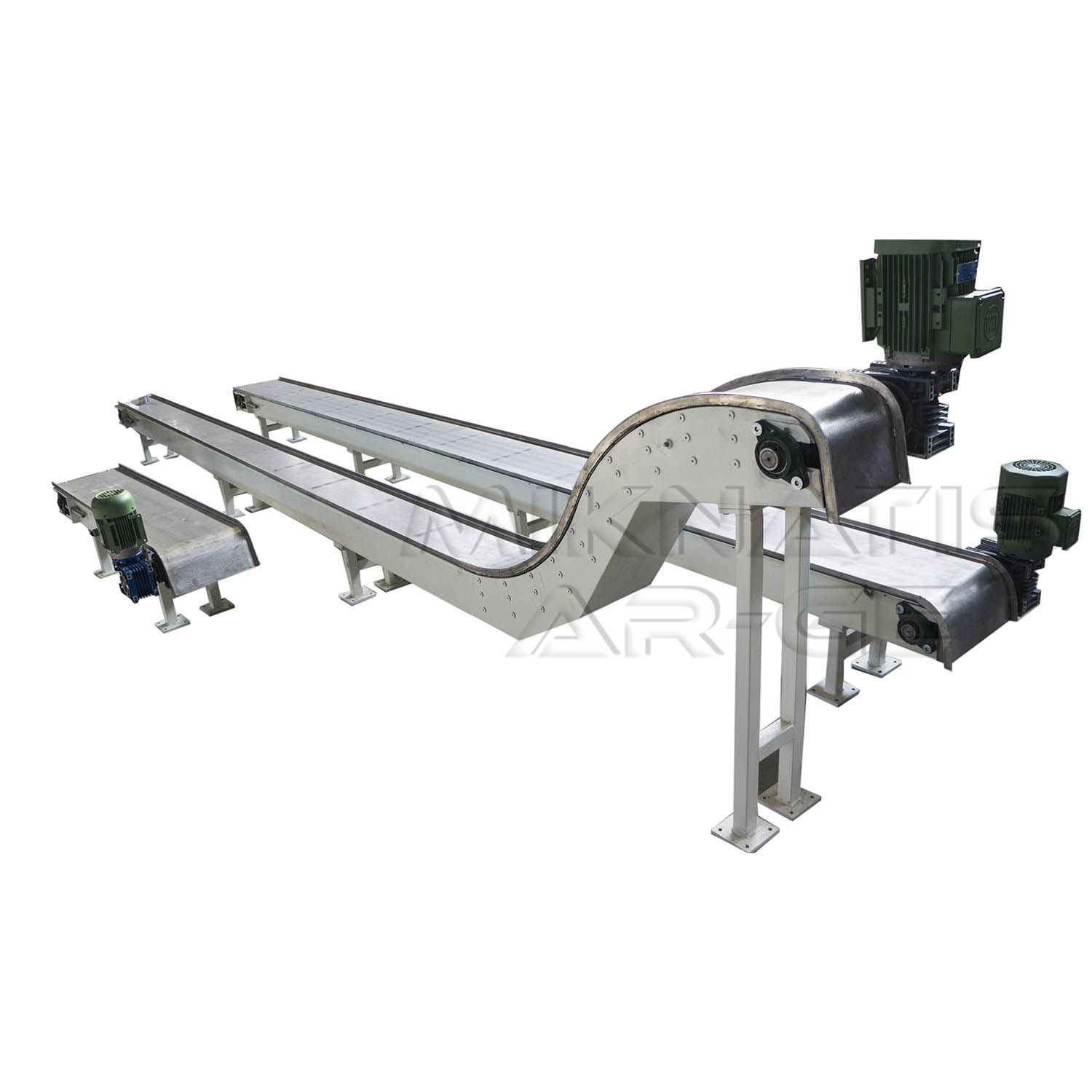


Magnetic Conveyors are specialized material handling systems, often referred to as scrap conveyors or chip conveyors, distinguished by their entirely enclosed design and the absence of external moving parts, unlike conventional belt conveyors. This unique construction makes them exceptionally reliable and low-maintenance solutions for various industrial applications. They are particularly ideal for safely transporting recycled materials, drilling chips, and sharp steel items such as nails, bolts, and small stampings.
These robust systems are indispensable equipment used extensively in metal and steel factories, white goods manufacturing, automotive industries, and sheet metal processing sectors. Their primary function is to efficiently transfer all kinds of ferromagnetic light and small materials between manufacturing cells during production processes. Engineered for flexibility, they can be manufactured in desired dimensions and configurations to perfectly suit a customer’s specific process requirements and production layout. Compared to conventional belt conveyors, magnetic conveyors inherently present less risk of work accidents and significantly reduce downtime, contributing to a safer and more productive operational environment.
How Magnetic Conveyors Work
The core principle behind magnetic conveyors involves a continuous series of powerful permanent magnets or electromagnets moving beneath a stationary, non-magnetic stainless steel slider bed. As these internal magnets traverse the length of the conveyor, they generate a fluctuating magnetic field that effectively grips and pulls ferromagnetic materials along the surface of the bed. The material being conveyed, such as metal chips or small parts, remains on the external surface of the sealed conveyor, completely separated from the moving magnetic assembly. This design ensures that no material can interfere with the internal mechanism, preventing jams and damage to the conveyor itself or the product being moved.
Key Features and Technical Advantages
Magnetic conveyors offer a range of technical advantages that make them superior for specific material handling tasks:
- Low Maintenance and Exceptional Durability: With no exposed moving parts like belts, chains, or sprockets, there is no belt wear to contend with. This significantly reduces maintenance requirements, eliminates the need for frequent adjustments or replacements, and ensures a longer operational lifespan, even when handling abrasive or sharp materials.
- Versatile Carrying Angles: These conveyors can be manufactured to transport materials precisely, horizontally, or at various inclined angles, including steep inclines up to 60°. This flexibility allows for efficient material elevation and integration into complex production lines, optimizing space utilization.
- Leak-Proof and Contamination-Free Operation: Thanks to their completely sealed and leak-proof structure, magnetic conveyors effectively prevent material jamming and contain coolants or oils associated with metalworking processes. This design ensures that no foreign matter can enter the conveyor mechanism, nor can liquids leak out, protecting the surrounding environment and maintaining product integrity. It also means the conveyed material does not damage the conveyor bed or accumulate within the system.
- Enhanced Safety: The fully enclosed design eliminates external moving parts, removing potential pinch points and reducing the risk of work accidents for operators. This significantly improves workplace safety compared to open-belt systems.
- Efficient Material Handling: They excel at handling wet, oily, or hot chips and small parts that would typically clog or damage traditional conveyors. The magnetic force ensures consistent and gentle transfer without damaging delicate components.
Applications Across Industries
Beyond the primary sectors, magnetic conveyors find critical applications in a broader range of industrial settings where ferromagnetic materials need to be transported efficiently and safely. These include:
- Machining and Grinding Operations: For removal of steel and cast iron chips, swarf, and small scrap.
- Stamping and Forming Plants: Handling slugs, blanks, and small parts from presses.
- Laser Cutting and Punching: Conveying scrap pieces and cut-offs.
- Fastener Manufacturing: Transporting nails, screws, bolts, and other small components.
- Waste Management: Separating and conveying ferrous metals in recycling facilities.
Their ability to move materials through various planes and angles, coupled with minimal operational fuss, positions magnetic conveyors as an optimal choice for modern automated manufacturing environments.


